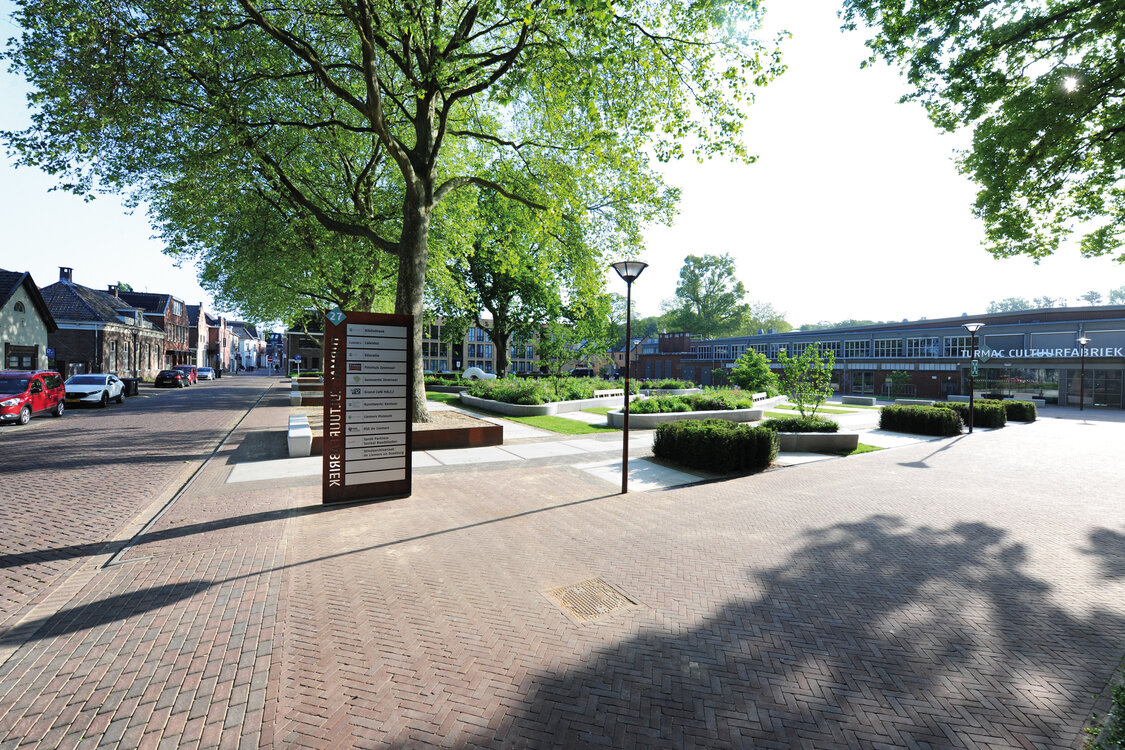
The site dates back to the year 1920, with the opening of the Turmac factory. The name Turmac originated from the geographical origins of the tobacco processed at the time: Turkey and Macedonia. Once cigarette production ceased in 2008, the historical building complex was developed into a publicly accessible space for culture and local administration. The name Melangeursplein also speaks to the square’s industrial past: the people whose job it was to mix the different varieties of tobacco into the typical blends were known here as Melangeurs.
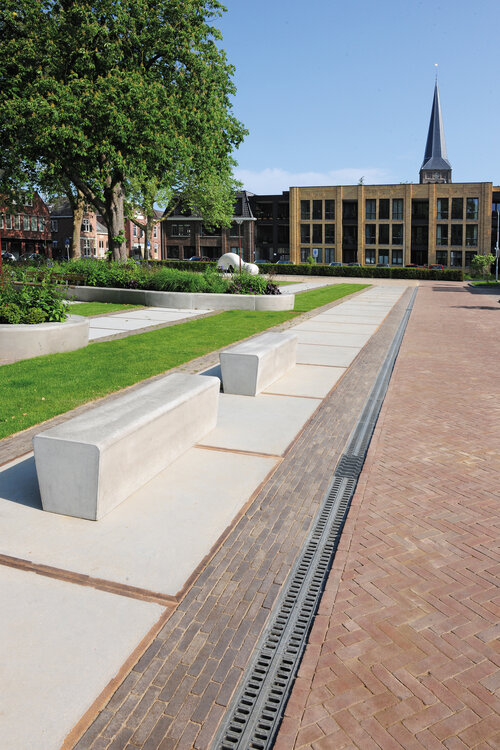
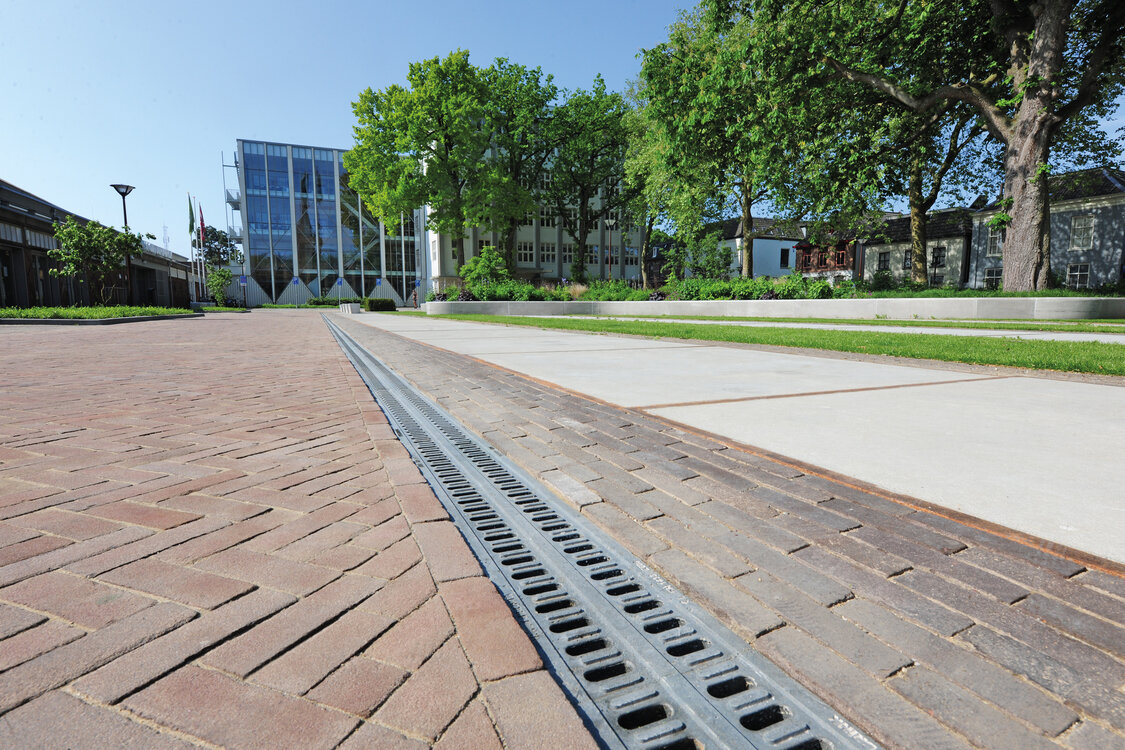
Nowadays, the square acts as the link between the town hall, Turmac Cultuurfabriek, downtown and the station area. Three extensive planting beds, seating options and clearly defined paths give the square an open structure. The installed dewatering line fits into the paved surfaces here as a technically necessary yet visually discreet component.
Drawing a line between different areas
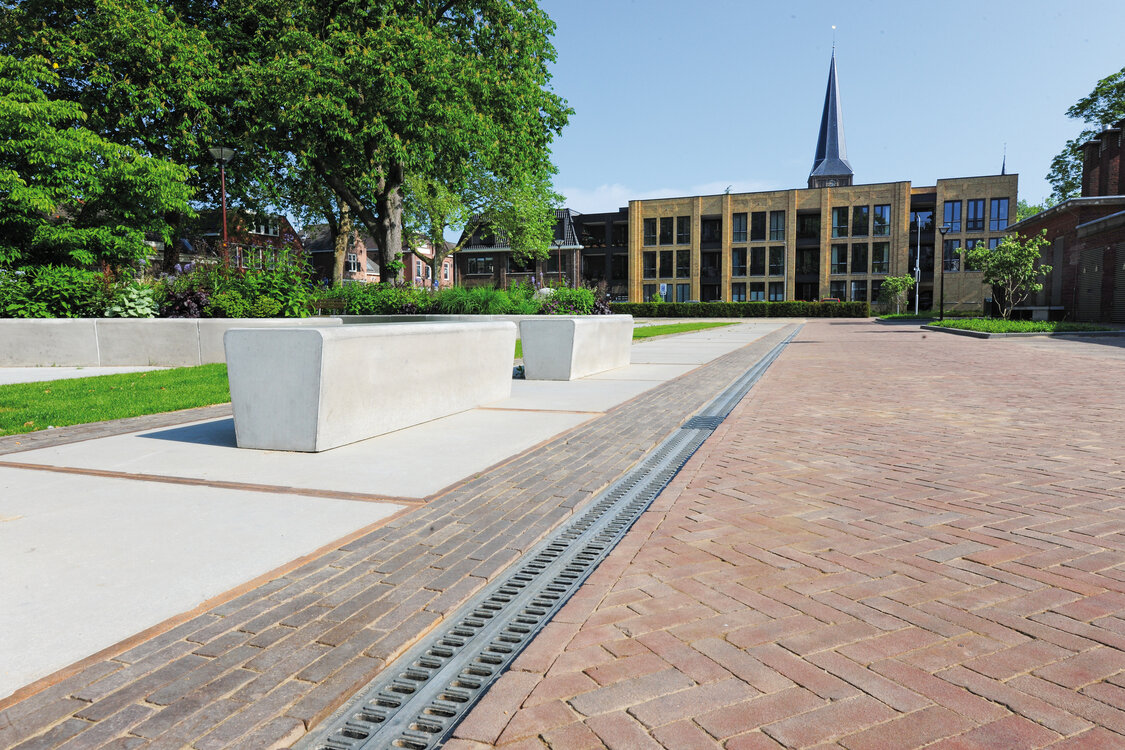
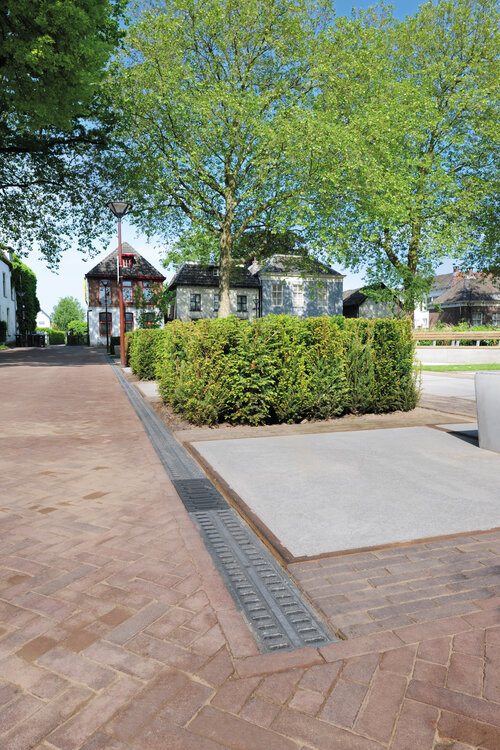
The Mono-Fortis from Richard Brink runs long distances straight across the square. It traces the transitions from reddish brown clinker paving to the lighter coloured paths and lounge areas. With its dark, uniform appearance, the channel remains visible yet fits elegantly into the linear structure of the outdoor area.
A total of 66 one-metre-long channel elements were installed, each with a nominal width of DN 150. The channels are 206 millimetres wide and 250 millimetres high. Falling under load class E 600, the system is designed to withstand a high amount of stress in areas used by vehicle traffic and is thus best suited to the local requirements.
Channel body and grating in one component
The key characteristic of the Mono-Fortis is its monolithic structure. The channel body and grating are not designed as standalone components; instead, they form a single polymer-concrete unit. This creates an enclosed construction inside the regular line of channels that does not require a separate grating cover.
Polymer concrete exhibits the strength required for heavy-duty use, however it is much lighter than other similarly sturdy materials. The construction therefore lends itself well to resilient linear drainage while facilitating a clearly defined, consistent floor design.
The individual channel segments are connected using a tongue and groove system. An integrated rubber seal sees to a watertight transition at the channel joints. This design enables a seamless connection between the individual segments, especially when putting together a drainage line using multiple one-metre sections.
Drainage units complete the system
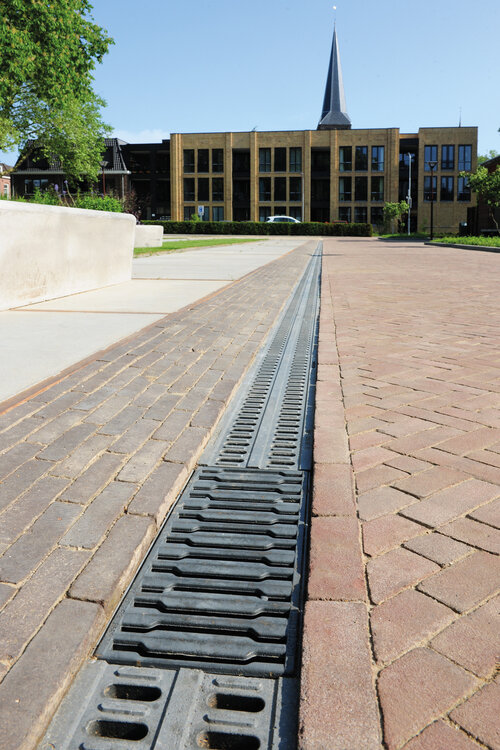
Four additional drainage units made from polymer concrete direct the water away from the line of channels and towards subsequent drainage systems. What’s more, Richard Brink GmbH & Co. KG produced compatible designer cast gratings from the Zippa range. These units and gratings also meet the requirements of load class E 600.
The larger gratings that are used to cover the units contrast visibly with the monolithic elements found within the same line of channels; at the same time, they remain a functional and aesthetic part of the solution. This makes for a consistent system of channel bodies and necessary connection points.
Measuring 68 metres in total, the drainage system plays a vital role in the newly arranged square. The channels’ monolithic construction combines a high level of resilience with a linear look. The heavy-duty drainage system thus slots perfectly into a public space that seeks to preserve its industrial past while also meeting its present-day needs.
(approx. 4,250 characters)